Sunday, July 20, 2014

TAG


There are ways to make a character memorable to the reader. Now, some will tell you to limit the number of characters to avoid having the reader become lost, but I have yet to figure out how to manage that when writing about the crew of a pirate ship representing many nationalities. The problem is how does a writer re-introduce a particular character several chapters after the initial entry? A useful device is a tag.

Tags are integral in the computing world to quickly find bits of information salted away in a gigantic reservoir of data. Some characters may appear only a few times, but the most minor characters need something to make them memorable as they come and go. Using a tag or two is a way to quickly identify a them to the reader.

Tags may be drawn from any aspect of the character’s appearance or behavior such as:

Voice – The pirate, Hogshead Shaver, has a voice like a heavy log drawn across gravel and a limp from an old wound, the pain causing him to be perpetually cranky. When he appears it is not always necessary to identify him by name. “As François stood glaring at the stowaways, he heard a heavy thump of someone climbing the stairs behind him.” Without saying any more, the reader will think, “Oh, oh, here comes trouble.”

Physical Features – Seaman Warden has a weasel face with an Adam’s apple that moves up and down especially when nervous. Several chapters later, “ François stared at Warden whose Adam’s apple twitched as he attempted to formulate a lie.” The reader will automatically say, “Oh, yeah. Weasel face.”

Physical Abilities – Jeremiah is a mid-teen on his first, real sea voyage. He knows nothing about a ship, referring to the bowsprit as “That pointy thing on the front of the boat.” He is faithful, and willing, and proves that his blue eyes are extra keen which allows him to spend time aloft in the crow's nest. As he says, “It doesn’t smell like below decks.” He also has a cast iron stomach to handle the ship's motion.

Dialect or Speech Mannerisms – English soldier, Lt. Harmond, has all the makings of someone Maggie, a woman pirate, would seriously consider sharing a bed with until he opens his mouth and in a snooty, childish-pitch, says, “Humph,” a sound he uses frequently. Toward the end of the story he is not identified by name, but by the use of “Humph,” when speaking, first when among the English conspirators and just before meeting an untimely and unpleasant demise the reader will know who got his just reward.

Hair – Cochran is a blond Irishman with a freckled complexion susceptible to sunburn and wears more clothes than most of the crew, so few are aware of the nasty scar on his left shoulder. He is jovial sort and an inveterate story teller through which he teaches valuable lessons.

Gestures – Seaman Stag swipes his constantly running nose.

Scent – Seaman Filbert smells as if he'd been bathing in the bilge despite having been tossed overboard with a bar of soap when the ship was becalmed.

There is an endless laundry list of quirks and mannerisms available that can become tags and add reality to your characters, but be careful about using too many for one character and distracting from the main character. Just one or two tags, little mnemonic devices to help our readers keep the actors straight as they pop in and out.

A great place to find ideas is of course, the movies, specifically looking at the body of work of some of great character actors such as:


                     Christopher Lloyd
                            and                                          

                                                                   Johnny Depp


NOTE: This eFile normally appears on the 1st and 15th of the month (or reasonably close), however until mid-September don't be surprised if it is late as much of my writing time is being taken by getting our new home ready to occupy.


Tuesday, July 1, 2014

To Format or Not to Format, That is the Danger


The early days of my youth were spent on my uncle's farm and then later helping a neighbor with his wheat fields. Despite how it appears, it's not easy growing that stuff you eventually smear peanut butter and jelly on in the morning and call it breakfast. Writing has not been easy, either. In the “old” days, to become published you had to entice an agent and then a publisher. Today it's worse. In 2012, R.R. Bowker (the official US ISBN distributor) counted more than 391,000 self-published titles. The most common complaint heard is that most of what's out there is . . . well, to be polite, not so good. Anyone can publish and obviously Anyone is.


Separating the wheat from the chaff, the good from the trash is tough.


As an author, editor, and publisher sifting is something I face every day. Some people can not put a sentence together let alone two. There are those who can actually spin a good tale, but do it their way and ignore accepted format. As one writer responded to an editorial suggestion, “I LIKE to use italics for "thoughts," and I think readers do as well. So I will continue to do so.”

The stark truth is, if you want to sell your labors to a reputable publisher AND keep an audience, you need to play the game.

If you are bent on approaching an agent or publisher, find out in what format they want to see your material displayed. That is generally one-inch borders all around, double spaced, but there could be slight variances. Digital submissions have their own rules. Know them. Follow them. As example, here is what one major publisher wants:

"Manuscripts should be formatted as follows:
Double-spaced, 12 pt. font with one-inch margins.
Indented first lines without extra returns between paragraphs.
"
(Although not noted, do not use exotic fonts. Stick to the basic serifs like Times New Roman, Droid, Bookman, Helvetica, or their clones.)

With that said, it is important to acceptably format what goes inside. Before the early 1900's it was a free-for-all and confusing as all get out until one publisher took Cooley's Bull by the horns and lead out for consistency. Thus was born . . .
The Chicago Manual of Style

The history of The Chicago Manual of Style spans more than one hundred years, beginning in 1891 when the University of Chicago Press first opened its doors. At that time, the Press had its own composing room with experienced typesetters who were required to set complex scientific material as well as work in such then-exotic fonts as Hebrew and Ethiopic. Professors brought their handwritten manuscripts directly to the compositors, who did their best to decipher them. The compositors then passed the proofs to the “brainery”—the proofreaders who corrected typographical errors and edited for stylistic inconsistencies. To bring a common set of rules to the process, the composing room staff drew up a style sheet, which was then passed on to the university community called The University Press Style Book and Style Sheet.

That sheet grew into a pamphlet, and by 1906 the pamphlet expanded into a book, Manual of Style: Being a compilation of the typographical rules in force at the University of Chicago Press, to which are appended specimens of type in use—otherwise known as the 1st edition of the Manual. [They loved long titles back then – ed.] At 200 pages, the original Manual cost 50-cents, plus 6-cents for postage and handling.

Now, in its 16th edition, The Chicago Manual of Style—at more than a thousand pages or more than two thousand hyperlinked paragraphs online—has become the authoritative reference work for authors, editors, proofreaders, indexers, copywriters, designers, and publishers. This hundred-plus-year evolution has taken place under the ongoing stewardship of Chicago’s renowned editorial staff, aided by suggestions and requests from the Manual’s many readers. (University of Chicago Press.)

(See: http://www.chicagomanualofstyle.org/about16_history.html

With very few exceptions, this is the format that publishers of non-fiction and fiction follow. There are other formats adopted by other professions, but if you want to be a published author of fiction, this is your tool.

Do all publishers follow this guide? No. Case in point. This past year a major, western U.S. publisher distributed an eBook. The title page was a train wreck, and it went down hill from there. Later, they published a page-turner, with “creative” formatting and some of the poorest editing in recent memory. Their audience complained and book sales slumped. While most readers are not consciously aware of formatting, they recognize a Golden Retriever from a duck.

Over the years, I have written articles for newspapers, scientific journals, law journals, and novels. Each has their own way of presenting material, and their respective editors expect to see submissions in that format. Considering the huge amount of material passing over their desk, it makes life a lot easier and happy for them. When an editor is happy, I am happy, and my bank account is happy.

While the Chicago Manual is the accepted guide for novels, it is not stringent. If, like the writer above with the italics issue, you want to slide a bit off the path to present something different, nothing says you can't. As the Chicago Manual board will say—just be consistent, however understand you are taking chances with acceptance, and if an agent or publisher wants it changed, be polite and compliant unless the request they are sending you off to third base before going to first, then be suspicious.


(A note: The Elements of Style by William Strunk Jr. and E.B. White deals primarily with language, and certainly worth a look.)


Monday, June 16, 2014

The Writer's Filing Cabinet: Conventions of Structure


A writer's story pretty much explores his or her vicarious experiences – things they have done, or experienced, or dreamed of doing. In 1939, James Thurber penned the short story, “The Secret Life of Walter Mitty.” It was released in 1942 as a book titled, “My World and Welcome to It.” The story was made into a film in 1947 with Danny Kaye in the lead role and remade in 2013 staring Ben Stiller. It is about a mild-mannered man with a vivid fantasy life. Sitting down to write, we discover and experience Walter's world within us. The challenge is to get a grip on that imagination and channel it, either for our own enjoyment or to share and bring enjoyment to others. (Not all stories need publishing. I have some favorites that I keep for myself.)

The various kinds of stories have different formats based on length. Think of them as separate drawers in a filing cabinet labeled Flash Fiction, Short Story, Novella, and Novel. We are now going to put folders into those drawers which are the Conventions of Structure.

The first folder is labelled “Category.” Categories change over time, as you will see in a moment, but for now these are what publishers will use:
  1. Adult
  • This category supposedly covers post-adolescents to post-cemetery and can contain more graphic depictions of events.
  1. Young Adult (YA)
  • The American Library Association (ALA) defines a young adult as someone between the ages of twelve and eighteen. Authors and readers of young adult (YA) novels often define the genre as literature traditionally written for ages ranging from sixteen years up to the age of twenty-five. That has changed over the pasts few years as more and more older readers enjoy reading this genre.
  • This category has been further divided by age. Teen or Juvenile Fiction covers the ages of ten and to fifteen.
  • YA stories often focus on the challenges of youth, sometimes referred to as problem novels or coming-of-age novels and are expected to use age-appropriate language.
  • These arbitrary boundaries had their doors blown off in recent years with the release of books like J.K. Rowling's Harry Potter series and Rick Riorden's series based on the gods of Ancient Greece and Rome. The intended age group is better educated and sophisticated to handle both language and themes. A better definition of a YA genre is a story in which the central character is a teenager at the beginning, who deals with teenage-type problems, and either grows into adulthood or is still a teenager when the story closes. Dummy-down language is inappropriate. In reality, more adults will probably read the story than teenagers, for instance, Samuel Clements, Huckleberry Finn.
  1. Children
  • Ages 10 and under.

Within each of these categories come sub-folders beginning with:

Genre is the wide range of areas that may be explored.

  • Action
  • Adventure
  • Comedy
  • Crime
  • Erotica
  • Faction
  • Fantasy
  • Historical
  • Horror
  • Mystery
  • Paranoid
  • Philosophical
  • Political
  • Realistic
  • Romance
  • Saga
  • Satire
  • Science fiction
  • Slice of Life
  • Speculative
  • Thriller
  • Urban

To narrow down the content there are more categories. Let's take CRIME for instance. In general, this would be a story about a crime that is being or was committed, or about a criminal's life. Subdivisions might be:
  • Detective story
  • Courtroom drama
  • Murder mystery
  • Hardboiled
  • Legal thriller
  • Gangster
Much of what I write is classified as Young Adult, Historical, Adventure. The central character's story begins as a child and follows him into adulthood, detailing his adventures as a pirate within an historically accurate backdrop.

The second sub-folder in a category file is “Theme.”
  • Theme is an idea or point central to the story, which can often be summed in a single word such as survival, love, death, betrayal, honor, etc.  A Novella and Novel have the room to accommodate more than one theme.
The third sub-folder is “Goal.”
  • This is the central, unifying end result that gives purpose to the events that take place. Before you start, you need to know where you will end.

The fourth sub-folder is “Plot.”
  • This entails the methods, means, or techniques used to solve problems while moving toward the goal.

The fifth sub-folder is “Outline,” or “Synopsis.”
  • A synopsis brings all of the above things into a short narrative and acts as a road map.

Mariann is a normal teenager who likes music and boys. She is awaken one night by a bad dream of something coming out of her closet. It's dark in her room even with a night light. Just when she convinces herself it was just a silly dream, she hears a soft scratching noise from the closet. Turning on the bedside light she sees a mouse come running out and across the floor. Her scream awakens the household and neighborhood. The family cat enters and chases the mouse while Mariann is jumping up and down on her bed, screaming. The mouse escapes with cat in pursuit and leaves the room. She doesn't get much sleep that night. The same dream awakes her the next night. She turns on the light, hears a rustling noise from the closet, expecting another mouse, but a rattle snake appears instead invoking even louder screams. The cat comes to the rescue, sees the snake, and takes refuge on the dresser Mariann was planning to use. Her father distracts the snake so she and cat can escape. While the family vacates, he stays outside her room to prevent the snake elsewhere in the house. The police arrive and thoroughly search her room, but the snake has disappeared.

  • An outline or synopsis is an important map to help keep your story on track by breaking it down into small parts, continually asking for the answers to: Who, What, When, Where, Why, and How.
     
  • Here is an example:
    • Mariann is a normal teenage girl
    • Mariann has a bad dream and is awaken
    • Mariann sees a mouse in her room
    • Mouse is chased away by the family cat
    • Mariann has the same bad dream the next night of something bad coming out of her closet
    • Mariann awakens and sees a rattle snake come out of the closet
    • Her dad distracts snake to allow Mariann and cat to escape
    • Father stands guard so snake can not invade other parts of house
    • Police come to remove snake
  • By applying the 5-W's & 1-H to each part, the plot evolves and the story blossoms. In this case, 3,200 words.

Now that we have this loose guide (you can go into as much detail as you want), it's time to start writing – right? Wrong. I know, I know. You're fingers are itching to get going, but there are a few other things that need be done which could change your best laid plans. That involves setting and especially what character traits each player is endowed.

The fifth sub-folder is "Beginning" and "End." This folder can be the hardest to fill. The Beginning refers to the "hook" or very beginning of the story that draws the reader's interest into the story. The End refers to how you wrap up the story once the goal is achieved, sometimes referred to as the "clincher," or "snapper" or a memorable closing that leaves the reader satisfied. If a writer doesn't plan this part carefully, the whole adventure may be left a pointless exercise.  In the story of Mariann above, the police exit the house after coming to remove the snake--they can't find it.

Saturday, May 31, 2014

Getting Started: One Approach


Get Ready, Get Set, Go!

Research is one of the basic elements to writing and I travel frequently to accomplish that whether to the Caribbean Islands or to the local Costco (a membership warehouse frequented by hordes of people of different ethnic origins.) During a recent jaunt to Mexico there was time to sit in a hot tub and talk with people (Unaware they were being studied as potential characters.) No matter where a writer goes when people discover what you do someone always says, “I'd like to write a book, but I just don't know what to write about.”

In The Way to Write, Rudolf Flesch and A.H. Lass (1955) say, “[Writing isn't just spelling . . . or just about grammar.] Writing is grasping ideas, seeing images, harnessing words [to] give shape and form to thoughts. What matters most in writing is not the rules and conventions for putting words on paper. What matters most in writing is the writer's mind.” If a person can't think of anything to write about, then continue to daydream. A person who has the soul of a writer has ideas buzzing around their head as if walking through a field of butterflies until seeing one in particular, grasping it, and then running off to nurture it.”

Photographs are often my inspiration butterflies stimulating ideas. Other things are people, conversations, books, magazines, TV, movies, even those celebrated prompts proffered by other writers. Mostly likely an idea will never be used because there are so many and not enough time to develop it, but so not to lose the thought, I generate a note with picture(s) if appropriate, and a summary not unlike what might be sent to an agent or publisher except it can be longer than 250 words. Usually, that summary is just long enough that the essence of the thought can be recaptured, but on occasion it has moved right into a full-blown short story. This summary is an important guide, becoming the beginning of an outline.

From Idea to the End of Life

A summary helps suggest initial players and location in the story. It also suggests what research is needed. For instance, if players are travelling on a bus or train, what do you know about the feel and experience of such travel. Cars, yes, but a bus or train? Let's say the story takes place in Durango, Colorado. What do you know about that place? The weather? The scenery? The history? The people? The things to do? You either have been there, have a person who can help answer questions, travel there (oh, yes), or Google the heck out of it.

When a story starts to percolate between the ears there is one thing that must take precedent—How is it going to end? What are you trying to say? Once that is settled, how did the players reach this point by backtracking to the beginning.

Did you say read the last chapter first?

Yes.

But how many times did Miss Penworthy in high school English admonished us to not read the end of a book? That will spoil the whole story.

Not so. Knowing how it ends adds a special dimension; The reader sees the twists and turns the players negotiates to get to that point, becoming actively engaged by questioning, “Why that way and not this way?” or “Hey, not the alley, stay on the street and this will happen.” It's a different way to read a story, but for the author, knowing the end is a necessity so not to drift off course. For fun, let's plot out a story.

Bored to Death

Two brothers live in Fresno, CA. Frank is in the 11th grade. Fred is in 9th grade. Frank is a good student, but Fred is smarter and school is boring. There is no father in the home so Frank tries to fill in. Fred resents his brother's “interference.” He sets curfew times and criticizes the people he runs with. They are still very close despite Fred's rebellionish nature until Frank kneels in Fred's blood and pulls his lifeless body close, sobbing because he didn't arrive soon enough. The story is to tell how a bright, young man, bored with school and too much time on his hands, gets into a deadly situation, and pays the ultimate price. (I like twists, so Fred is not with his gang this day, but seeing them go into the store, he walks across the street to join them, in effect becoming an innocent victim.)

Backtracking. Okay, Fred got involved with a gang whether a member or not, but how did he die? He was shot by a store owner. Why? He was standing outside the store when it was being robbed. Why? He was joining his friends. Who? The guys robbing the store. Why were they robbing the store? How did Fred get involved with these guys? Did he know what was going down? Where was Frank? Did he know what was going down? Did Frank try to intervene to prevent his brother from running with these guys? What did he do? Why did Fred chose to ignore his older brother with whom he had a very close relationship and start associating with the gang?

By backtracking, we have a beginning, an explanation how it happened, and who was involved by repeatedly asking the ultimate questions: Who? What? When? Where? Why? And How?

The information can be plugged into the traditional A. 1. a. format, or it can be a sentence or two, or expanded with more detail into a short paragraph describing each act of the story. What you want is something to guide your writing along by highlighting events—this happened and the players respond by doing this because of these characteristics or these events, and because they do this, this happens and the players respond by . . ..

A story is like a game of dominoes when stood on end. Here is a passage from a book I wrote several years ago.

One evening, instead of putting the dominoes away after finishing a game, [Aunt Florence] began standing each one on end. I loved this game, making twists, and turns, and all manner of deviations from a straight run.

That night, seated on the edge my bed, she said, “Francis, life is like the dominoes we played with earlier. Each one represents an event in your life. One might represent the day your father and my Eben were killed. It falls into the next representing your mother starting her business. That one falls into the next which is you coming to live with me. That would never have happened if the first hadn't moved into the second.”

The older I got the more I could see the domino theory working in my life. Many years later I came to understand, one's chain did not necessarily begin moving at birth. What has happened within our family could be inexorably linked to something that began four-hundred years earlier.


That story was built by setting up life-event dominoes starting at the end where the protagonist wins fame, fortune, and discovers the truth about his family. The chain snaked around and had side adventures that rejoined the main theme, so it is not a solely linear tale.

There are many ways to write a story, but something has to be in place so not to miss important elements as discussed in previous eFiles AND to keep your writing from wandering.

How do you plan out a story?


Saturday, May 24, 2014

An Author's Reference Library (An Anatomy Extra)


Writers and authors are word crafters. That involves what words to use and their correct usage, including the all-important punctuation. Shakespeare was good at creating and using words differently which is wonderful, but this all can be tricky depending upon the era being featured. How I write a story placed in 2000 America will be different than the story written in the European-based world 400 years ago. Writing descriptions and comparisons as seen through the eyes of the actors can not legitimately use words not in existence at the time. That's when it behoves me to check the reference library. There are a number of important works on one bookshelf within easy reach, but having them a few keystrokes away when not in the office is equally important. Here are the four most important references I feel should be the foundation blocks to an author's reference library.

1.  Dictionary

There are many good dictionaries, but if you write period pieces an etymological dictionary is a must.

My favorite is the online dictionary.com for American usage.

According to Wikipedia "Dictionary.com, one of the leading online dictionaries, was founded in 1998 by Brian Kariger and Daniel Fierro, as part of Lexico Publishing, which also included Thesaurus.com and Reference.com. The proprietary content for the site is based on the Random House Unabridged Dictionary, with other licensed content from the Collins English Dictionary, American Heritage Dictionary and others."

If you look way down toward the bottom right in small print you will find links to medical terms and abbreviations to all sorts of things including a medical term dictionary. There is also a dictionary of abbreviations and slang. Their description says, "The American Heritage Abbreviations Dictionary provides simple descriptions of acronyms and shorthand from many areas of life, including computer science, sports, social media, conversation and industry. Entries include explanations of the context of abbreviations as well as the direct meaning."

2.  Thesaurus 


On my shelf is a 50 year-old copy of Roget's that began as a window on the world of words. It's only gotten better with age. Online I use thesaurus.com, the companion to above.


3.  Grammar and punctuation

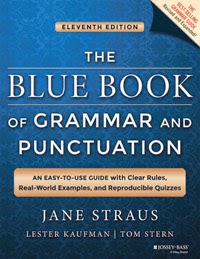
An excellent resource is The Blue Book of Grammar and Punctuation. (http://www.grammarbook.com/)  Being online is plus for rapid retrieval of the needed information. There is nothing wrong with Elements of Style by E.B. White, William Strunk, Jr., and there are others.


4.  The Chicago Manual of Style

This is the writers' and publishers' bible as to how a written work should look and feel, in use since 1906.


A foundation is the supporting structure. 


If faulty, everything built upon it will be weak and defective. Choose well. The other consideration is accessibility. A book on the shelf is handy and often can be better for in-depth research, but online resources can thumb through all the entries with incredible speed to locate needed information quickly. I have both because 1) I grew up with physical books and know the worth of seeing adjacent entries to a specific question. That is something electronic databases don't always do. 2) I travel to research. Although I have a lightweight computer, with the attending paraphernalia, the backpack weighs upwards of twenty pounds. It would be impracticable as heck to haul those around, too. As the old knight in Indian Jones admonished, "Choose wisely."

Saturday, May 17, 2014

Point of View - The Voice

Note: This eFile was posted 4/1/2014, but never made it out ??? So, we try again)

In an earlier post the discussion focused on Point of View, or the place from which the reader “listens in” and/or “watches.” This decision dictates how the story will be written. The next decision is what voice to use to convey the story.

Typically, the first or third-person POV narrator is a player who may or may not be involved in the action. In addition, they may or may not take a biased approach in telling the story, nor is the player necessarily the focal character. An example is Dr. Watson telling the story of Sherlock Holmes.

First-person is limited in that the story can only be told through the eyes of the teller (“I”) who can not truly know what others are thinking, or know about events taking place beyond their presence unless told by someone at that place (via phone, radio, telepathy, or what have you.)

Third-person telling uses “he", "she", "it", and "they", but not "I". Here the narrator is able to convey the thoughts, feelings, and opinions of one or more characters and relate events occurring in other times and places. Third-person is the most versatile in that the thoughts, feelings, and actions of all the characters can be detailed with the ability to jump from one location to another.

A widely-used format, this form can be subdivided into three classes. The first is third-person subjective where the storyteller is limited to one player (sometimes referred to as third-person limited). Although seeming to be a first-person mode, this form still uses third-person pronouns. Hemingway applied this in The Old Man and the Sea.

A second subdivision is third-person objective where the storyteller does not describe any character's thoughts, opinions, or feelings, thus sounding like a newspaper article or biography. Any feelings must be acted out by the player, and thoughts have to be vocalized, however information of which players are not privy can be revealed. The objective is for the storyteller to take a neutral or unbiased position and just relate the facts.

A third subdivision is third-person omniscient, the most commonly used in the late Nineteenth through Twentieth Centuries. The story is presented by a narrator who sees and knows everything within the the story world, and what each of the characters is thinking and feeling. Having this omniscient view, the storyteller can offer judgements and opinions about the behaviour of each player.

As example, I have written a series which utilizes both first-person, and third-person omniscient POV's. The first book takes place in our time period and is narrated in the first person by a character who is the focus of the story, David. By the end of the book he is joined by the ghost of his deceased ancestor who collaborates in telling his story which takes place in the early 1600's. That book (Volume 2) is told in the third person by David as his ancestor now knows everything that happened. The series then alternate.

While people will use different terms or refine subdivisions (splitting hairs) these are two of the three basic tools as relate to the Point of View a writer can use. The last is time which will be explored next.

Wednesday, May 14, 2014

Something About Doors


Newspapers use AP Style and fiction/non-fiction use the Chicago Manual of Style, but they have one very important thing in common—the opening.

Starting out as journalist, this was hammered into my thick head from the get-go. Competing against many, many stories, I had 25 to 30 words to capture the reader's attention, giving the basics of who, did what, when, and where? The rest of the story explained the how and why. In fiction and non-fiction the lead or hook is a bit different, but must capture the reader's interest.

There are no dogmatic rules for openings, only good, basic principles, and one of those principles is to capture the most important, most dramatic, and most interesting scene. However, it isn't important to start writing that way. After finishing the first draft, crafting the story comes into play with numerous edits, one of the first being the lead. Checking the delete files or trash can will reveal that I will write at least 20 to 25 variations. Here's an example. (No, not the 25. Just the first draft and most recent consideration.)

Leaving El Hierro and returning home in Nebraska after the first summer on that island was like stepping into a room and turning off the lights. The glitz, glamor, and celebrity status hadn’t made it that far. However, as word of our exploits came to the surface my popularity index increased markedly, something not especially welcomed. Still somewhat socially retarded, anonymity continued to be a preference, but all of a sudden, strangers wanted to be best buds, which made me nervous. Despite the risk of being labeled a snob, I was selective about making friends, and didn’t especially like crowds trying to schmooze their way into my sphere of comfort. Then they showed up – the paparazzi. At least I guessed that’s what they were, guys lurking about at the darndest times and unsuspecting places to take my picture.

*    *    *    *
I learned a painful lesson while on El Hierro in the Canary Islands. When the back of my neck began to itch there was danger nearby. The stronger the itch, the closer the danger. Sitting on a towel looking out over the west side of Branch Oak Lake not far from my home in Lincoln, Nebraska, I began rubbing my neck and looking in both directions of the grassy shore. The girls were some distance away, returning from the outhouse. There were no others on our side and the area was fairly open so no one could sneak up on us.

For each lead-in it is important to ask, “Is this going to cause the reader to be interested enough to continue?”

I look at a lot of books, especially those written by best selling authors. I am not always impressed. Truthfully? Too many have boring leads and the only draw is knowing a pretty good story is hidden somewhere further on. Serious and new authors struggling for an audience need to work harder, and this is one place to start.

That brings me to the place a number of authors start their story—a prologue. These generally amount to background information—sometimes valuable, sometimes not. I've seen it done well when written with a grabbing lead just as done in Chapter 1.

A well-known adventure writer wrote a novel a few years ago about the recovery of an important and valuable religious artifact found beneath the water near an island. How this artifact came to rest there was an exciting and intriguing short story used as his prologue. Another author more or less laid out the future world he was about to place his story. (z-z-z-z).

Remember, you, the author, are competing with over 200,000 other authors a year for the attention of a fickle audience. Whether you start with a prologue or Chapter 1, that is the first thing your potential audience is going to see. While promotion is important, promotion can not do much for an uninteresting beginning. Your lead or hook is the door that presents the handle. Will the visitor be interested enough to turn the knob and enter, or move to the next door?